

Godzilla x Kong: The New Empire
Year:
2024
Running time:
115 mn
Nationality:
USA
Language:
English
Genre:
Action, Fantasy, Sci-Fi
Director:
Adam Wingard
Producer:
Legendary Pictures, Screen Queensland, Warner Bros
Screenwriter/s:
Terry Rossio, Simon Barrett, Jeremy Slater
Cast:
Rebecca Hall, Kaylee Hottle, Dan Stevens, Brian Tyree Henry, Rachel House, Alex Ferns, Fala Chen, and others
Other websites:


Trailer:

Summary of the film
The epic new film will delve further into the histories of these Titans, their origins and the mysteries of Skull Island and beyond, while uncovering the mythic battle that helped forge these extraordinary beings and tied them to humankind forever. (Filmaffinity)
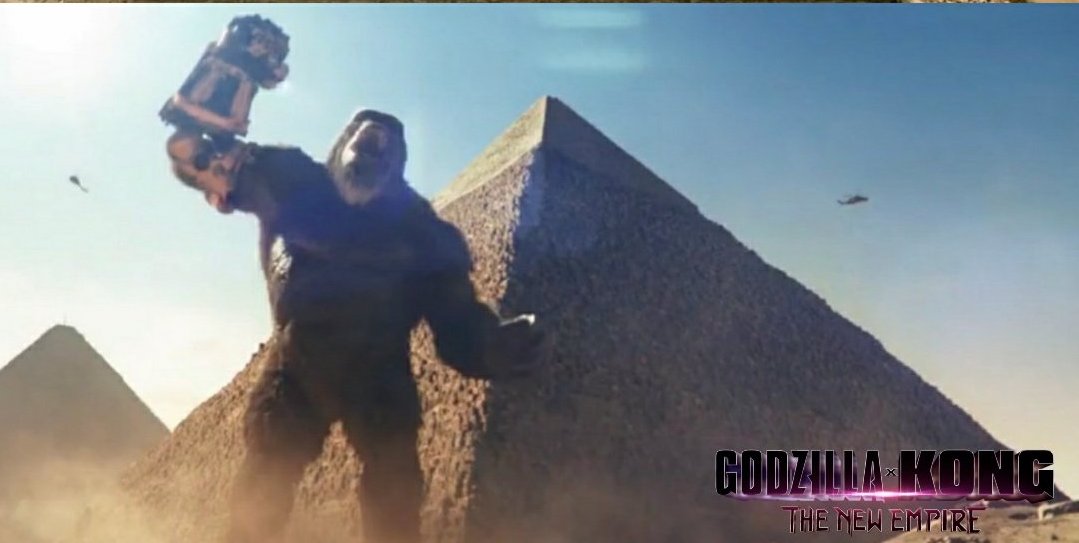
Kong next to the Pyramids of Giza (Screenshot by the author)
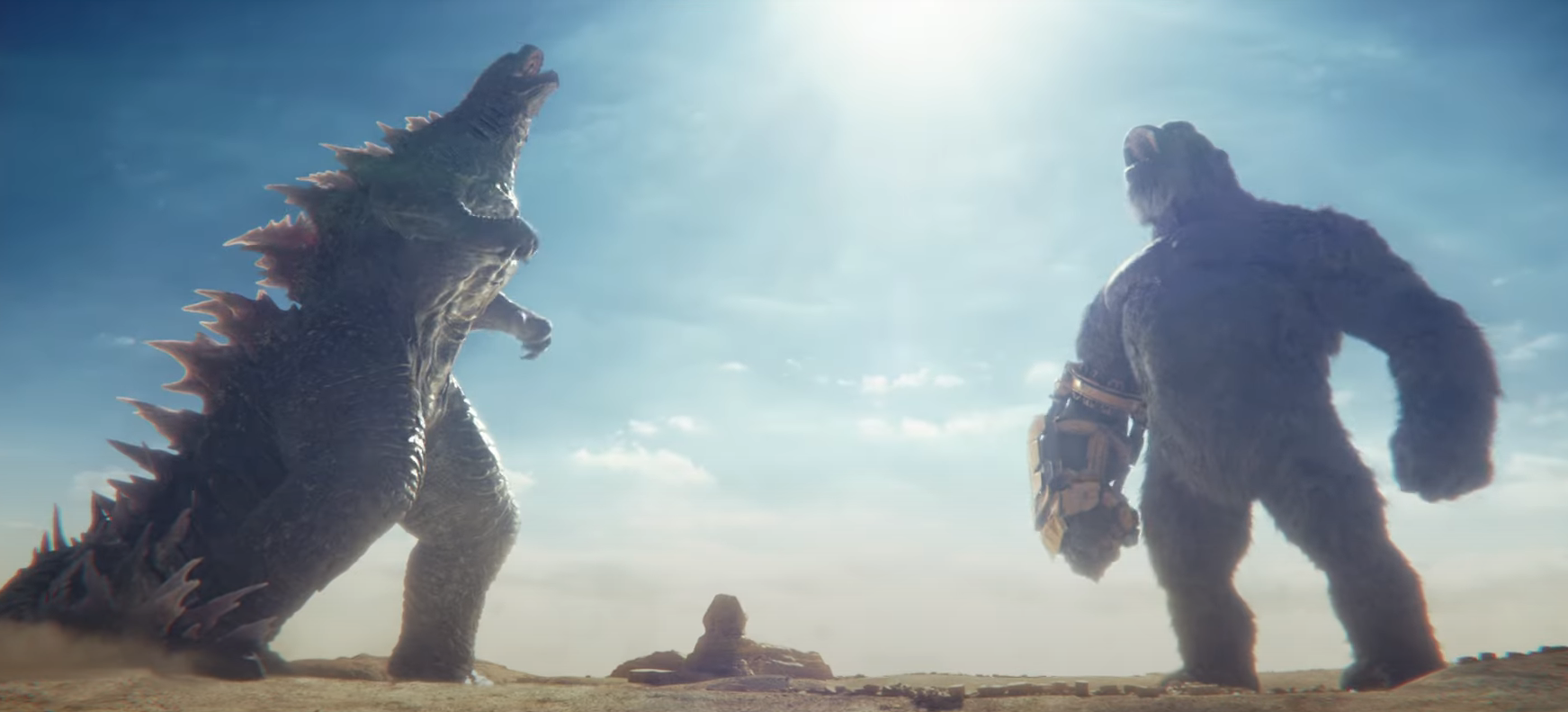
Godzilla and Kong ready to fight, Kaefra sphinx in the background (Screenshot by the author)
Egyptomania narratives or motifs
Godzilla x Kong: The New Empire, arguably one of the most successful translations, until now, of the spirit of kaiju eiga (Japanese monster movies) into the cinematic codes of the Hollywood’s “Monsterverse”, revisits a familiar trope in Egyptomania. Following one of the recurrent narrative templates of the kaigu eiga sub-genre (i.e. the destruction of cities by giant monsters), The New Empire contains one pivotal sequence set outside Cairo, right at the very feet of the millennial pyramids of the Giza complex. This is the place (the portal) where Kong re-emerges from the Hollow Earth to summon Godzilla for a duel (in reality, the mighty ape is trying to convince Godzilla to join him in the fight against Star King, the film’s true villain monster). The clash of Titans (as a result of which the pyramids are almost completely destroyed!!!) ends when Jia (Kaylee Hottle), a teenage descendant of the Iwi tribe (the native human population of the Hollow Earth), makes her way to the surface to “reawaken” as a queen standing on the Great Sphinx’s head. Jia’s visions, as well as the energy surges that have previously manifested in the film, are recalled and eventually staged here through a metaphor of power and renewal that participates of the symbolism of the Giza plateau as a sacred land, and of the pyramids as “resurrection machines”. Within the thematic and ideological framework of the movie, the titular “New Empire” displays the features of an eco-feminist utopia constantly threatened by the prospects of annihilation. What the movie suggests, then, is a link between a future political stasis (a utopian world) and ancient Egyptian approaches to magical rebirth.
Author: Samuel Fernández-Pichel
Tags
Write a Comment
Tem de iniciar a sessão para publicar um comentário.