

Beetlejuice Beetlejuice
Year:
2024
Running time:
104 mn
Nationality:
USA
Language:
English
Genre:
Comedy, Horror
Director:
Tim Burton
Producer:
Warner Bros., Plan B Entertainment
Screenwriter/s:
Alfred Gough, Seth Grahame-Smith, Miles Millar
Cast:
Michael Keaton, Wynona Ryder, Jenna Ortega, Catherine O'Hara, Justin Theroux, Monica Bellucci, Willem Dafoe, and others
Other websites:


Trailer:

Summary of the film
After an unexpected family tragedy, three generations of the Deetz family return to Winter River. Lydia's life, still haunted by Bitelchús, is turned upside down when her rebellious teenage daughter, Astrid, discovers the mysterious model of the city in the attic and the portal to the Beyond accidentally opens. With trouble brewing in both realms, it's only a matter of time before someone calls Bitelchus' name three times and the mischievous demon returns to unleash his own mayhem. (Filmaffinity)
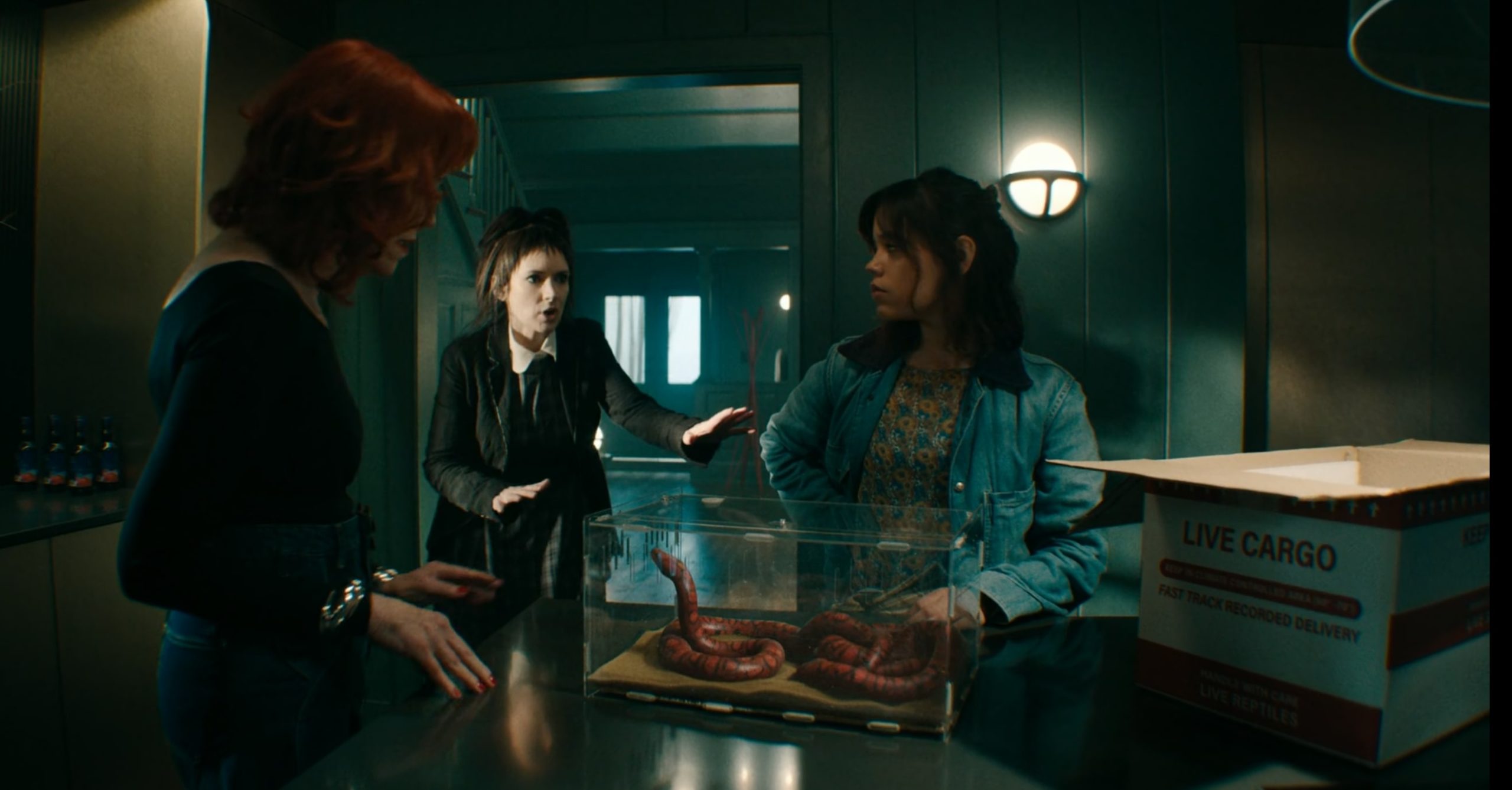
Fig. 1: Delia and Astrid talk about the Egyptian-inspired ritual that Delia intends to perform in honour of her dead husband (Screenshot by author)
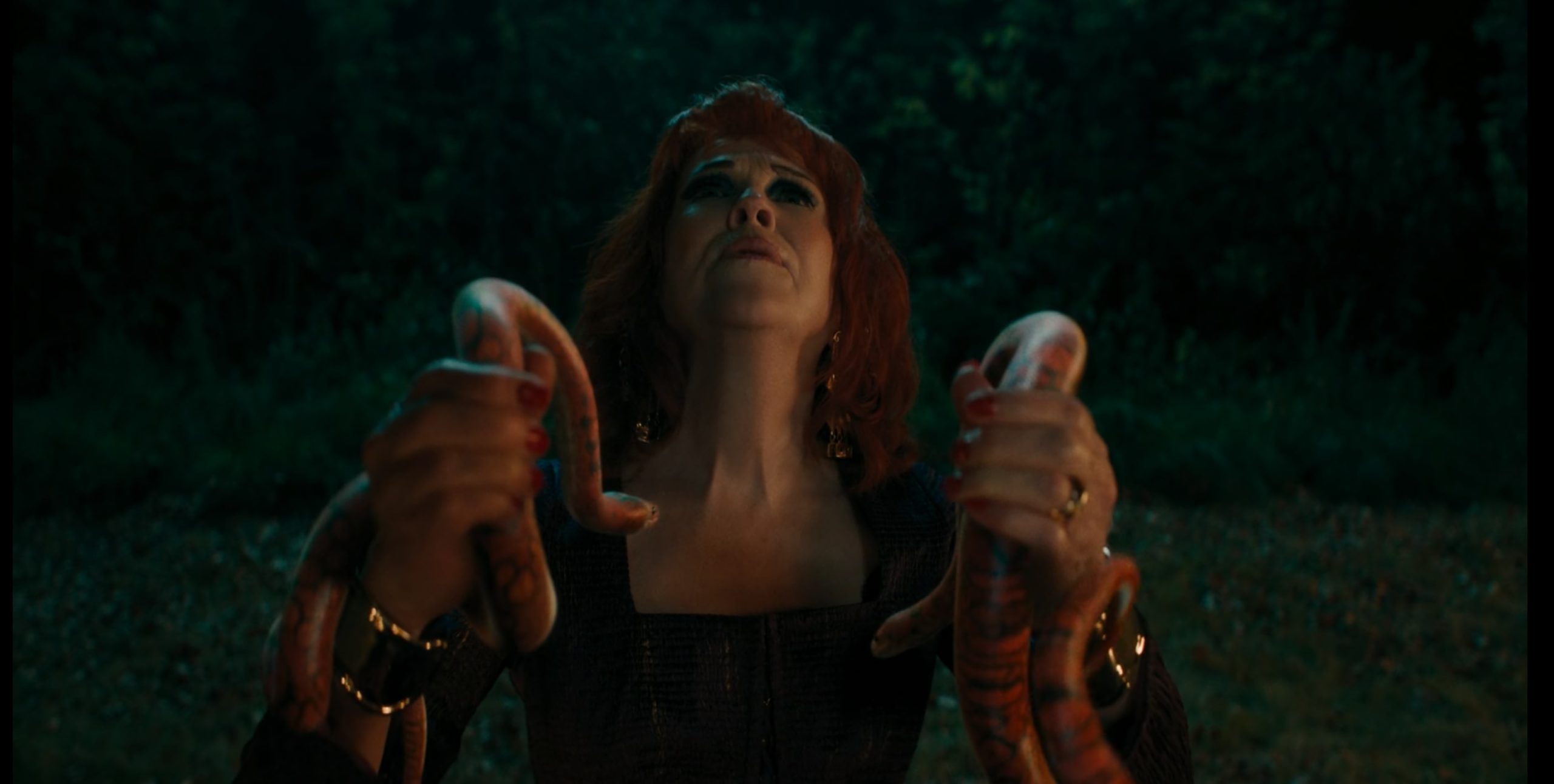
Fig. 2: The snakes during the performance of the ritual before taking Delia's life (Screenshot by author)
Egyptomania narratives or motifs
In Tim Burton's sequel to the late 1980s blockbuster Beetlejuice, there is content linked to Egyptomania. The character of Delia Deetz (played by Catherine O'Hara) receives a box at the Winter River house containing asps that she has ordered herself. She says that the asps have been stripped of their fangs and are therefore completely harmless. With these reptiles Delia intends to perform a ritual: in ancient Egypt, she says, queens performed rituals with asps at the tomb of their pharaoh to manifest their love beyond death. In this way she intends to establish a link with her own missing husband, Charles, and show her eternal love for him as the queens of ancient Egypt did. The young Astrid (Jenna Ortega) is sceptical about these words and says that the snakes were rather the incarnation of the enemy of the sun god Ra in the underworld and thus represent universal chaos.
Delia then goes to the cemetery to perform the ritual at the tomb of her husband, playing the role of the queen who survives her king, the pharaoh. To do so, she takes asps from a basket to symbolise her love for her husband, but they bite Delia, who falls down dead.
In this film, which focuses on the link between life and death, between the world of the living and the dead, ancient Egypt is used as an incidental element in the construction of Tim Burton's fantastic and macabre imaginary. This linking of the Egyptian with the funerary in contemporary popular culture is not surprising. In the film, large evil serpents inhabit a liminal world that connects both spheres, that of the living and that of the dead. Here, too, asps fulfil this function by enabling Delia's access to the world of the dead. In this case, the idea of the tail-biting serpent or uroboros is taken as a symbol of eternity, an idea that is not Egyptian per se, and linked to a royal ritual that expresses the queen's love for her pharaoh. This fictitious ritual would be an echo of the death of Cleopatra VII recreated by classical authors such as Plutarch and Strabo, among others. According to these authors, one of the possible causes of the queen's death is that she was bitten by asps after being defeated by Rome. The asp is also explicitly linked, in Astrid's words, to the serpent Apep/Apophis as the enemy of the sun god in the underworld during the night hours, as described in the so-called Egyptian Underworld Books. In its slow becoming, the sun confronts the serpent and, emerging victorious from this confrontation, is able to be reborn triumphant at dawn and ensure the continuity of creation and the momentary defeat of chaos.
In short, we have a series of interesting Egyptian motifs, combined and reformulated in the creative universe of Tim Burton, who had already shown his interest in ancient Egypt in some of his previous productions, such as Wednesday.
Delia then goes to the cemetery to perform the ritual at the tomb of her husband, playing the role of the queen who survives her king, the pharaoh. To do so, she takes asps from a basket to symbolise her love for her husband, but they bite Delia, who falls down dead.
In this film, which focuses on the link between life and death, between the world of the living and the dead, ancient Egypt is used as an incidental element in the construction of Tim Burton's fantastic and macabre imaginary. This linking of the Egyptian with the funerary in contemporary popular culture is not surprising. In the film, large evil serpents inhabit a liminal world that connects both spheres, that of the living and that of the dead. Here, too, asps fulfil this function by enabling Delia's access to the world of the dead. In this case, the idea of the tail-biting serpent or uroboros is taken as a symbol of eternity, an idea that is not Egyptian per se, and linked to a royal ritual that expresses the queen's love for her pharaoh. This fictitious ritual would be an echo of the death of Cleopatra VII recreated by classical authors such as Plutarch and Strabo, among others. According to these authors, one of the possible causes of the queen's death is that she was bitten by asps after being defeated by Rome. The asp is also explicitly linked, in Astrid's words, to the serpent Apep/Apophis as the enemy of the sun god in the underworld during the night hours, as described in the so-called Egyptian Underworld Books. In its slow becoming, the sun confronts the serpent and, emerging victorious from this confrontation, is able to be reborn triumphant at dawn and ensure the continuity of creation and the momentary defeat of chaos.
In short, we have a series of interesting Egyptian motifs, combined and reformulated in the creative universe of Tim Burton, who had already shown his interest in ancient Egypt in some of his previous productions, such as Wednesday.
Author: Abraham I. Fernández Pichel
Tags
Write a Comment
Tem de iniciar a sessão para publicar um comentário.