
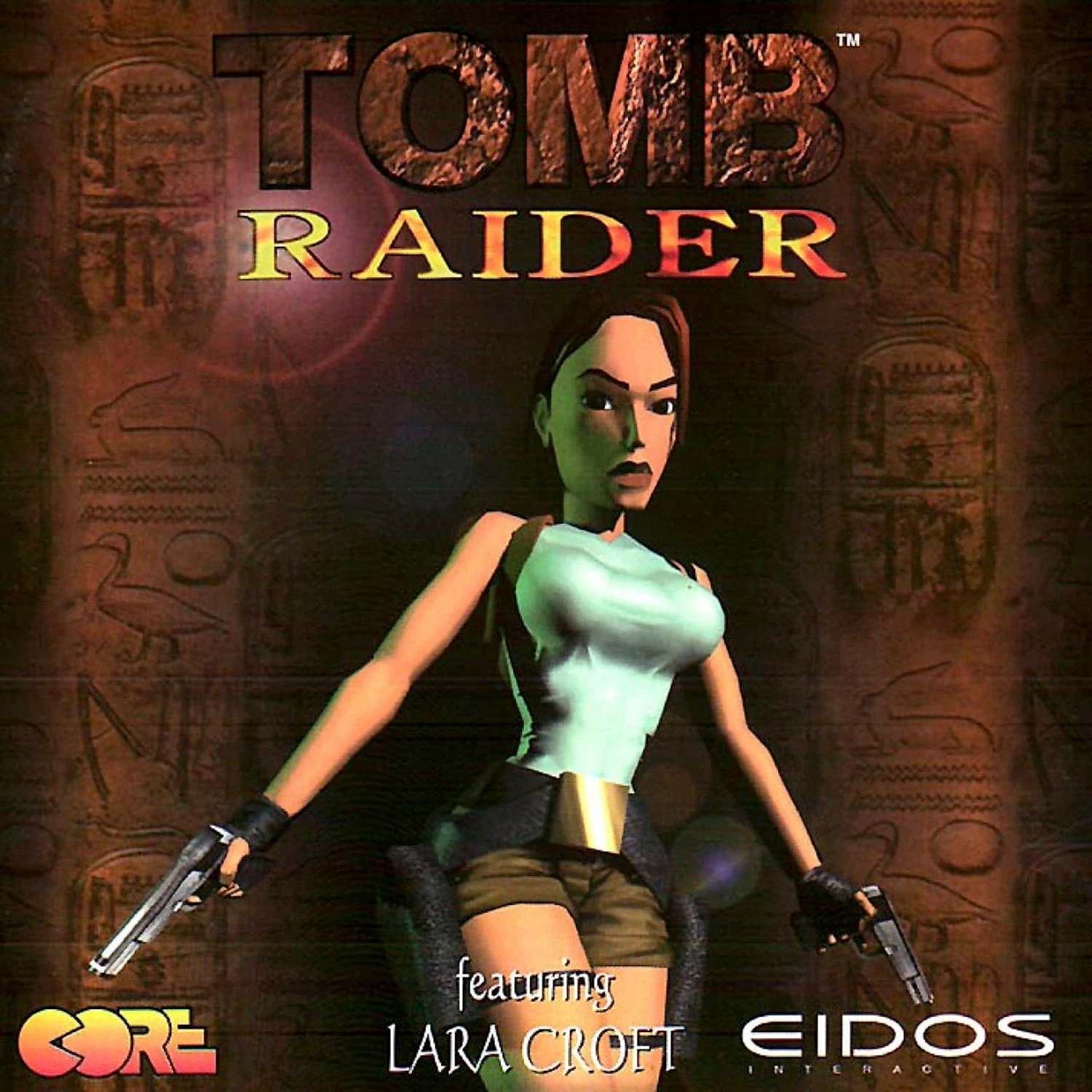
Tomb Raider
Game Family:
Tomb Raider
Year:
1996
Language:
English
Authors:
Toby Gard
Designer:
Paul Douglas, Jason Gosling, Gavin Rummery
Artists:
Toby Gard, Heather Gibson, Neal Boyd
Publisher:
Core Design
Number of Players:
Single-player
Genre:
Action, Adventure
Other websites:

Videos by players:

Summary of the game
In the game Tomb Raider (1996), archaeologist-adventurer Lara Croft is hired by businesswoman Jacqueline Natla to find a lost ancient artifact, the Scion of Atlantis. After recovering one fragment of the Scion from the tomb of Qualopec in Peru, Lara discovers that the artifact, which was originally possessed by the rulers of Atlantis, has since been divided into three parts. Her search for the remaining pieces takes her to Greece, where she retrieves a second fragment from the tomb of Tihocan, and ultimately to Egypt, where the third fragment is hidden.
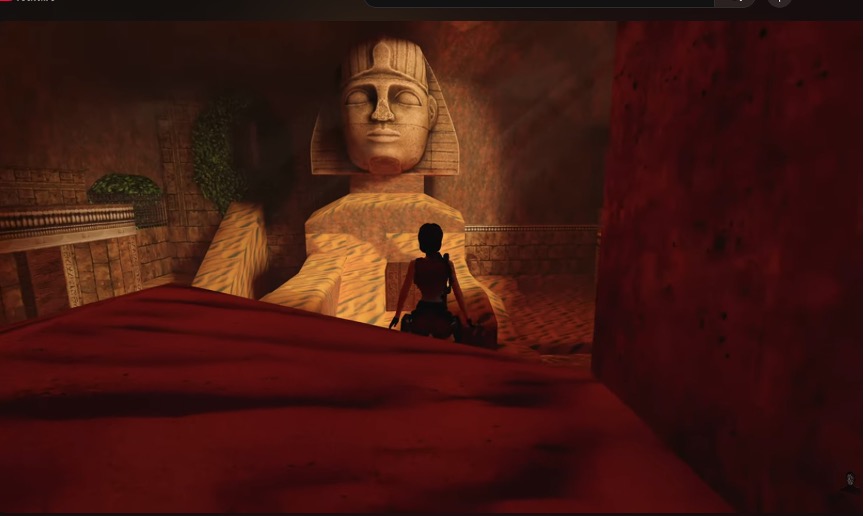
In Tomb Raider, Lara Croft stands in from of the Sphinx in the Sanctuary of the Scion (Screenshot by Author)
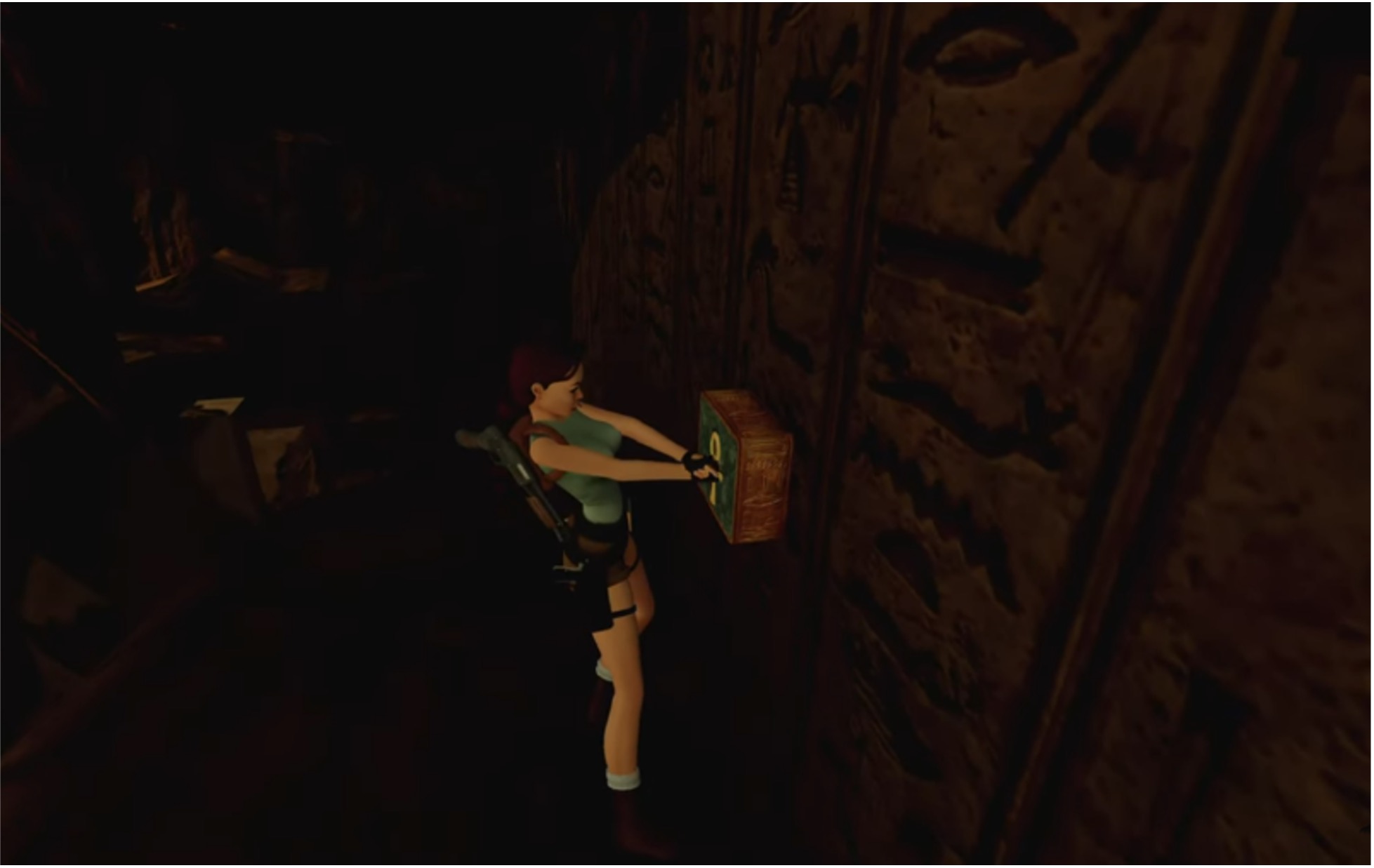
In Tomb Raider, Lara Croft Lara Croft placing an Ankh-key for the Sanctuary of the Scion (Screenshot by Author)
Egyptomania narratives or motifs
Egypt appears in one part of Tomb Raider (1996), specifically in Levels 10–12: the City of Khamoon, Obelisk of Khamoon, and Sanctuary of the Scion. Despite occupying a relatively brief segment of gameplay, these levels draw heavily upon modern Egyptomania imagery and tropes.
The Egyptian section centers on a fictional “lost city” landscape composed of monumental temples, subterranean catacombs, and colossal statuary. Most notably, the final Egypt level features a Great Sphinx as an interactive architectural centerpiece. Lara must retrieve two ankhs to open a door in the Sphinx’s chest, directly invoking one of the most recognizable symbols of ancient Egypt. The use of ankhs-as-keys reinforces the Egyptomania association of hieroglyphic symbols with mystical unlocking mechanisms.
The City of Khamoon emphasizes tomb exploration through flooded chambers, moving stone blocks, crocodile and mummy infested catacombs, and concealed passageways. The Obelisk of Khamoon functions as a trial by fire, requiring vertical navigation around a monumental central obelisk to collect four artifacts. These architectural spaces exemplify the tomb-as-puzzle-box trope, a defining feature of 19th- and 20th-century Egyptomania in literature and film. Ancient Egyptian architecture is presented not primarily as funerary or ritual space, but as a mechanized labyrinth intentionally designed to test and endanger intruders.
The Sanctuary of the Scion further reinforces Egyptomania’s fascination with monumental scale and sacred concealment. The Sphinx becomes less a religious monument and more a colossal lock protecting supernatural power. Egypt here functions as a repository for dangerous ancient knowledge, a pattern common in modern popular culture, in which Egypt safeguards catastrophic relics from a forgotten golden age of humanity.
Importantly, the game blends Egyptian motifs with Atlantean mythology. Egypt is positioned as the final resting place of the third Atlantean ruler’s Scion fragment, suggesting a narrative of continuity between Atlantis and the Egyptian pharaohs. This reflects a recurring Egyptomania theme in which Egypt is imagined as inheritor or guardian of primordial, lost civilizations, collapsing distinct ancient cultures into a shared mythic antiquity.
Although Egypt only appears in three levels, the game overall participates in broader traditions of modern Egyptomania through its visual language, narrative structure, and archaeological fantasy tropes. One of the most prominent motifs is the tomb-as-labyrinth trope, which is utilized in the Egyptian levels, along with those set in Peru and Greece. The game’s environments are constructed as vast, trap-filled ancient spaces that include mechanized doors, concealed chambers, collapsing floors, and monumental stone architecture. This design reflects a long-standing Egyptomania tradition in Western popular culture that imagines ancient tombs as elaborate puzzle boxes filled with hidden dangers and preserved secrets. Although the in-game tombs are Peruvian, Atlantean, or Egyptian, their logic and aesthetic owe much to earlier Egypt-centered adventure narratives. Tomb Raider reinforces the idea of the ancient world as technologically mysterious and architecturally advanced in hidden ways. Massive stone mechanisms, precise architectural symmetry, and preserved subterranean complexes contribute to a vision of antiquity as both frozen in time and secretly sophisticated, all of which are core imaginative elements that developed alongside modern Egyptomania in literature and film.
The sacred artifact quest is another key motif. The Scion functions as a mysterious, powerful relic of a lost civilization, an object imbued with transformative or destructive potential. This narrative device parallels the Egyptomania fascination with ankhs, scarabs, solar disks, and cursed amulets, in which ancient objects carry supernatural or world-altering power. The game reproduces this structure even while utilizing Atlantis as the focused ancient culture.
Finally, the character of Lara Croft also participates in Egyptomania’s broader colonial-adventurer tradition. As a wealthy British archaeologist, independently extracting artifacts from ancient sites, Lara reflects the legacy of 19th- and early 20th-century imperial archaeology, particularly practices associated with Egyptological excavation and antiquities removal. The game normalizes the private acquisition of ancient cultural materials, reinforcing a romanticized vision of Western exploration in non-Western ruins. The game’s formula draws heavily from the adventure-archaeology tradition popularized in film (e.g., Indiana Jones), which itself draws heavily on Egyptomania, even when Egypt is not the specific setting.
In summation, while Egypt occupies only a portion of Tomb Raider (1996), the Egyptian levels highlight culturally resonant imagery: desert temples, ankhs, obelisks, catacombs, mummies, and the Sphinx. These elements participate directly in late 20th-century Egyptomania by presenting Egypt as monumental, mysterious, mechanized, and saturated with dangerous ancient power. Significantly, even in the levels not set in Egypt, the aesthetics of Egyptomania are utilized: ancient ruins as puzzle spaces, powerful relics as narrative drivers, and the Western adventurer as mediator between modernity and a monumental, but silent, past. The game thus participates in the broader cultural tradition of Egyptomania that later installments in the franchise would continue to utilize and which have helped the game become the icon of popular culture that it is today.
The Egyptian section centers on a fictional “lost city” landscape composed of monumental temples, subterranean catacombs, and colossal statuary. Most notably, the final Egypt level features a Great Sphinx as an interactive architectural centerpiece. Lara must retrieve two ankhs to open a door in the Sphinx’s chest, directly invoking one of the most recognizable symbols of ancient Egypt. The use of ankhs-as-keys reinforces the Egyptomania association of hieroglyphic symbols with mystical unlocking mechanisms.
The City of Khamoon emphasizes tomb exploration through flooded chambers, moving stone blocks, crocodile and mummy infested catacombs, and concealed passageways. The Obelisk of Khamoon functions as a trial by fire, requiring vertical navigation around a monumental central obelisk to collect four artifacts. These architectural spaces exemplify the tomb-as-puzzle-box trope, a defining feature of 19th- and 20th-century Egyptomania in literature and film. Ancient Egyptian architecture is presented not primarily as funerary or ritual space, but as a mechanized labyrinth intentionally designed to test and endanger intruders.
The Sanctuary of the Scion further reinforces Egyptomania’s fascination with monumental scale and sacred concealment. The Sphinx becomes less a religious monument and more a colossal lock protecting supernatural power. Egypt here functions as a repository for dangerous ancient knowledge, a pattern common in modern popular culture, in which Egypt safeguards catastrophic relics from a forgotten golden age of humanity.
Importantly, the game blends Egyptian motifs with Atlantean mythology. Egypt is positioned as the final resting place of the third Atlantean ruler’s Scion fragment, suggesting a narrative of continuity between Atlantis and the Egyptian pharaohs. This reflects a recurring Egyptomania theme in which Egypt is imagined as inheritor or guardian of primordial, lost civilizations, collapsing distinct ancient cultures into a shared mythic antiquity.
Although Egypt only appears in three levels, the game overall participates in broader traditions of modern Egyptomania through its visual language, narrative structure, and archaeological fantasy tropes. One of the most prominent motifs is the tomb-as-labyrinth trope, which is utilized in the Egyptian levels, along with those set in Peru and Greece. The game’s environments are constructed as vast, trap-filled ancient spaces that include mechanized doors, concealed chambers, collapsing floors, and monumental stone architecture. This design reflects a long-standing Egyptomania tradition in Western popular culture that imagines ancient tombs as elaborate puzzle boxes filled with hidden dangers and preserved secrets. Although the in-game tombs are Peruvian, Atlantean, or Egyptian, their logic and aesthetic owe much to earlier Egypt-centered adventure narratives. Tomb Raider reinforces the idea of the ancient world as technologically mysterious and architecturally advanced in hidden ways. Massive stone mechanisms, precise architectural symmetry, and preserved subterranean complexes contribute to a vision of antiquity as both frozen in time and secretly sophisticated, all of which are core imaginative elements that developed alongside modern Egyptomania in literature and film.
The sacred artifact quest is another key motif. The Scion functions as a mysterious, powerful relic of a lost civilization, an object imbued with transformative or destructive potential. This narrative device parallels the Egyptomania fascination with ankhs, scarabs, solar disks, and cursed amulets, in which ancient objects carry supernatural or world-altering power. The game reproduces this structure even while utilizing Atlantis as the focused ancient culture.
Finally, the character of Lara Croft also participates in Egyptomania’s broader colonial-adventurer tradition. As a wealthy British archaeologist, independently extracting artifacts from ancient sites, Lara reflects the legacy of 19th- and early 20th-century imperial archaeology, particularly practices associated with Egyptological excavation and antiquities removal. The game normalizes the private acquisition of ancient cultural materials, reinforcing a romanticized vision of Western exploration in non-Western ruins. The game’s formula draws heavily from the adventure-archaeology tradition popularized in film (e.g., Indiana Jones), which itself draws heavily on Egyptomania, even when Egypt is not the specific setting.
In summation, while Egypt occupies only a portion of Tomb Raider (1996), the Egyptian levels highlight culturally resonant imagery: desert temples, ankhs, obelisks, catacombs, mummies, and the Sphinx. These elements participate directly in late 20th-century Egyptomania by presenting Egypt as monumental, mysterious, mechanized, and saturated with dangerous ancient power. Significantly, even in the levels not set in Egypt, the aesthetics of Egyptomania are utilized: ancient ruins as puzzle spaces, powerful relics as narrative drivers, and the Western adventurer as mediator between modernity and a monumental, but silent, past. The game thus participates in the broader cultural tradition of Egyptomania that later installments in the franchise would continue to utilize and which have helped the game become the icon of popular culture that it is today.
Author: Tara Sewell-Lasater
Tags
Write a Comment
Tem de iniciar a sessão para publicar um comentário.