
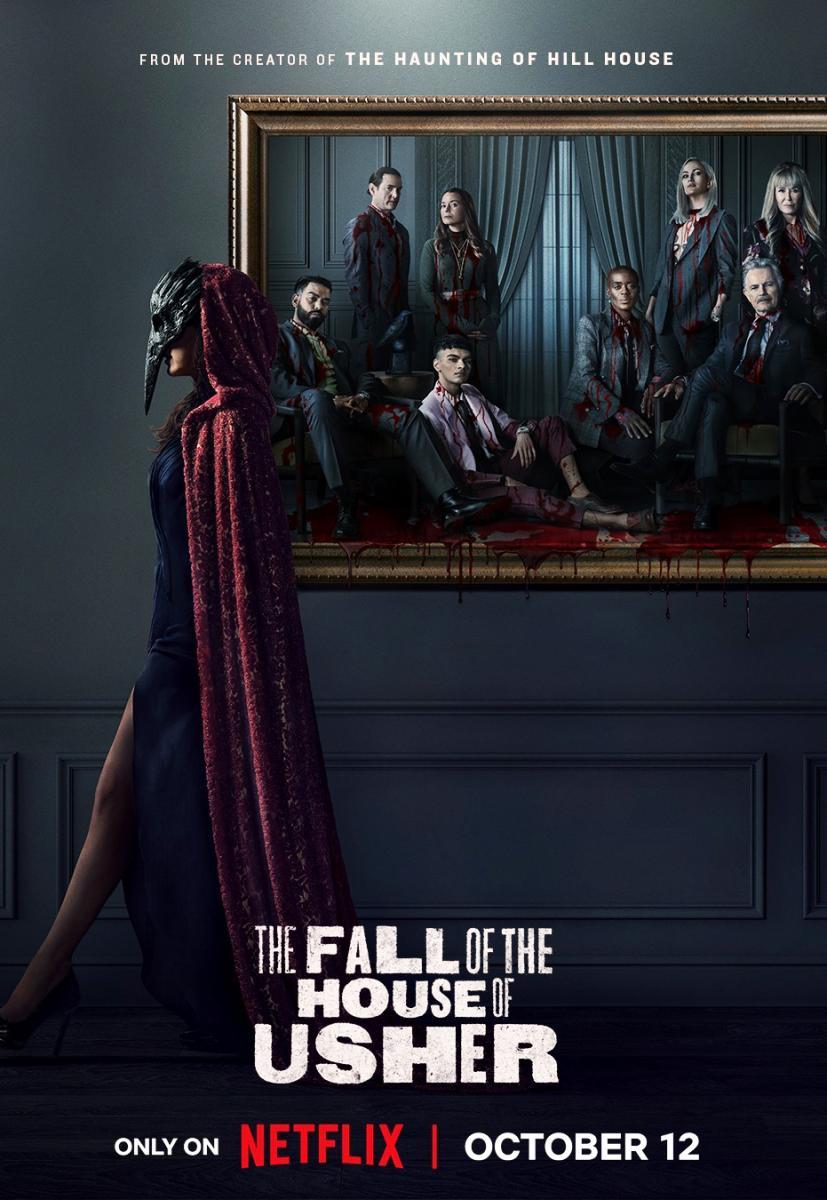
The Fall of the House of Usher
Year:
2023
Running time:
58 mn
Number of Seasons:
1
Episodes:
8
Genre:
Mystery. Horror, Supernatural
Nationality:
USA
Language:
English
Platform:
Netflix
Director:
Mike Flanagan
Producer:
Intrepid Pictures, Netflix
Screenwriter/s:
Mike Flanagan, Justina Ireland, Rebecca Klingel, Dani Parker, Kiele Sanchez, Jamie Flanagan, Emmy Grinwis and Mat Johnson
Cast:
Bruce Greenwood, Carla Gugino, Mary McDonnell, Mark Hamill, Henry Thomas, Kate Siegel, Rahul Kohli, Samantha Sloyan, T'Nia Miller, Zach Gilford, Willa Fitzgerald, and others
Other websites:


Trailer:

Summary
To secure their fortune (and future) two ruthless siblings build a family dynasty that begins to crumble when their heirs mysteriously die, one by one. (Filmaffinity)
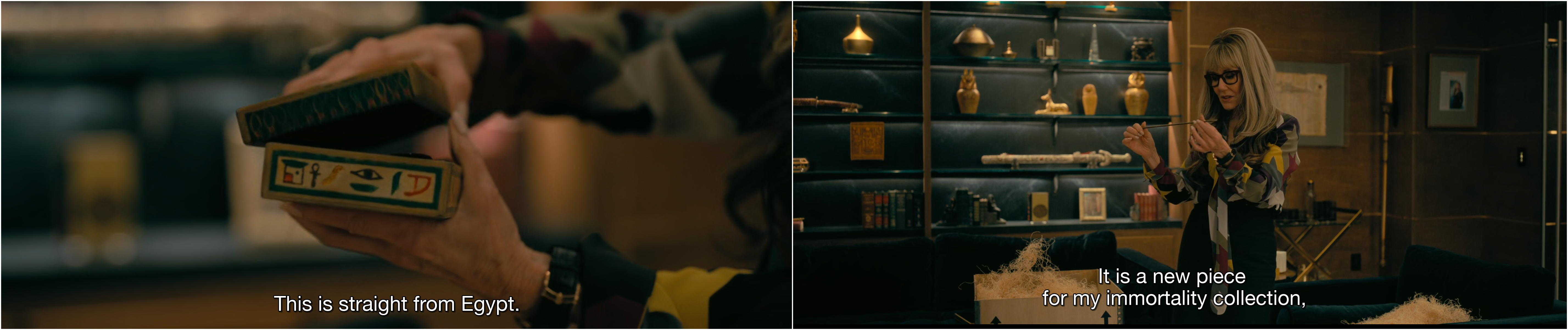
One more object for Madeline Usher's Egyptian collection: a mummification spatula (Screenshot by the author)
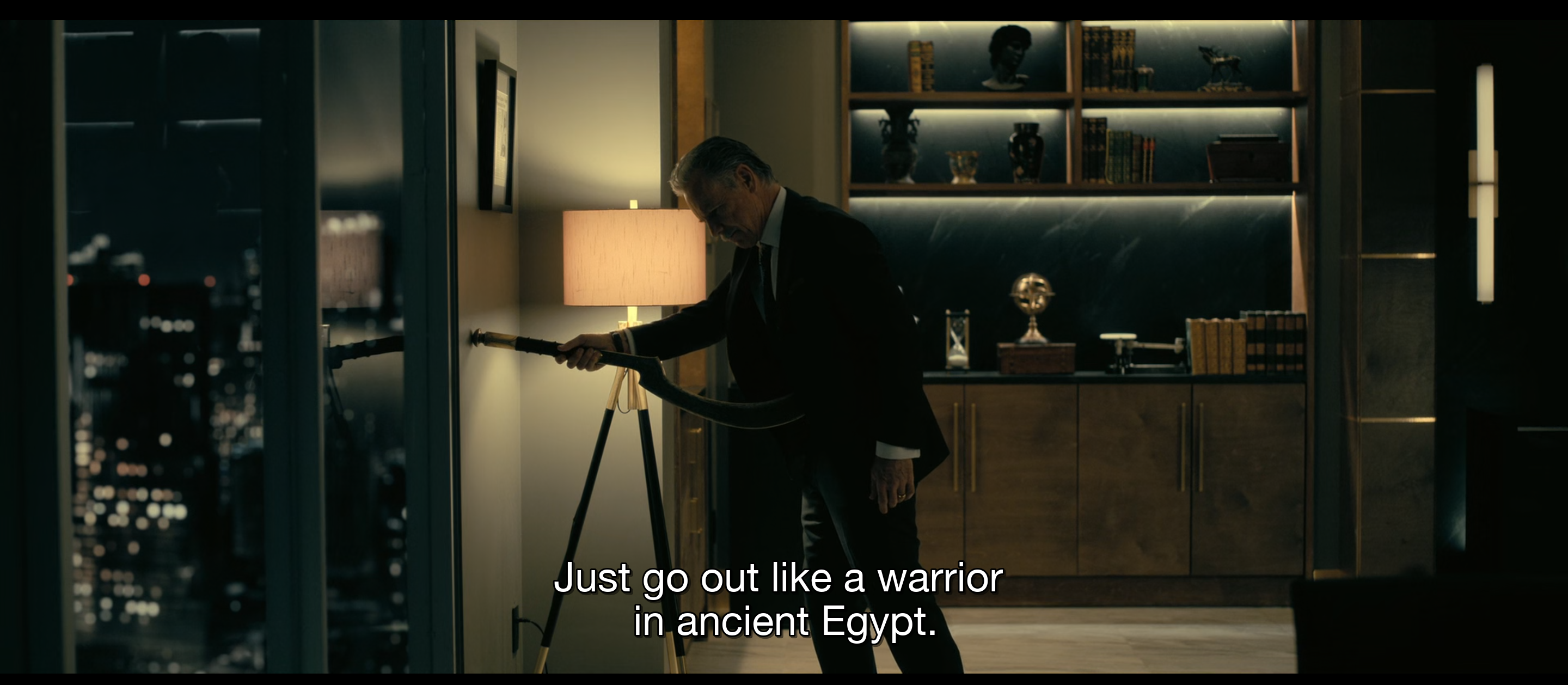
Roderick Usher attempts suicide by the sword-khepesh (Screenshot by the author)
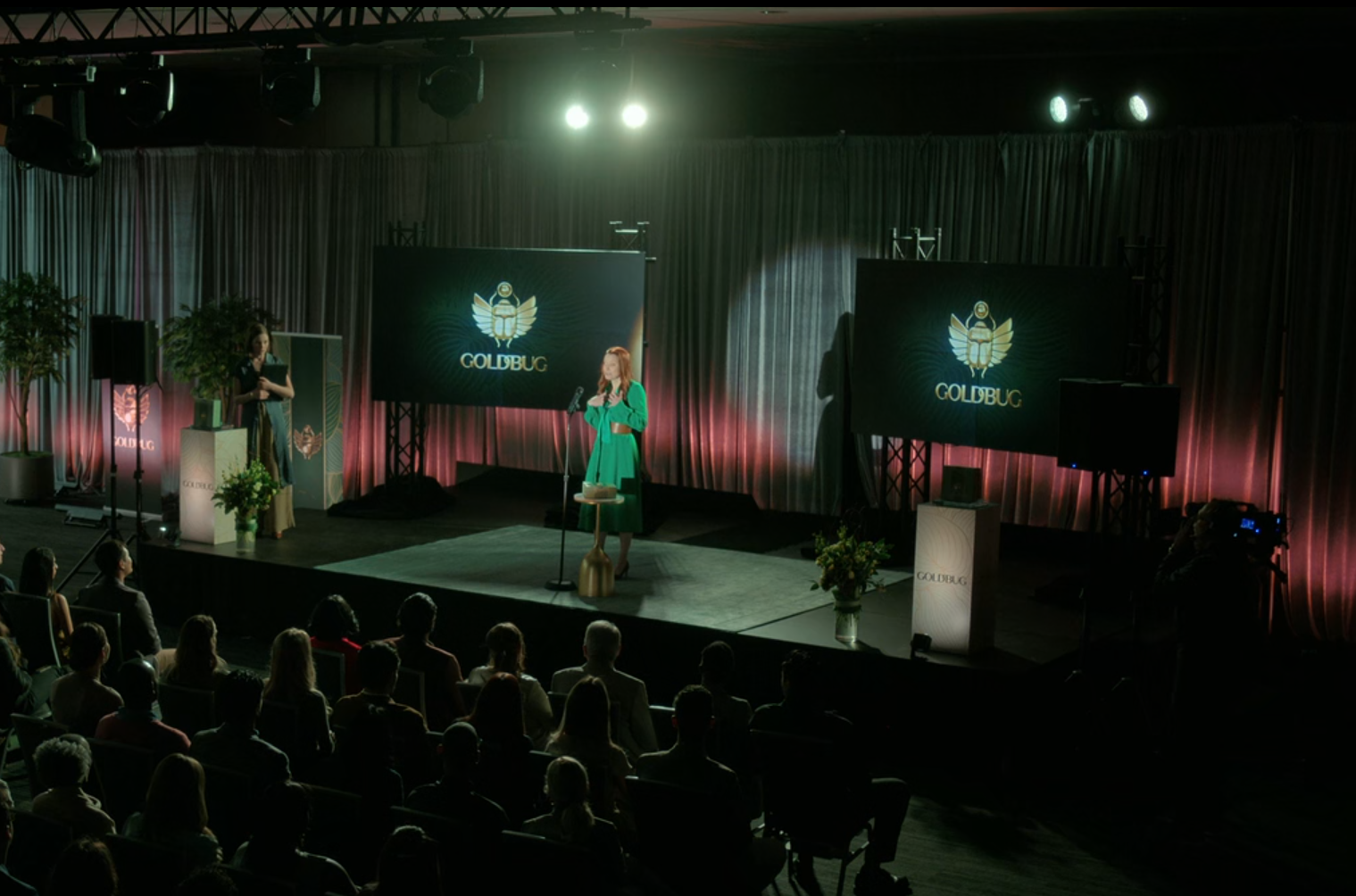
Launch of the Goldbug promotional campaign by Tamerlane Usher (Screenshot by the author)
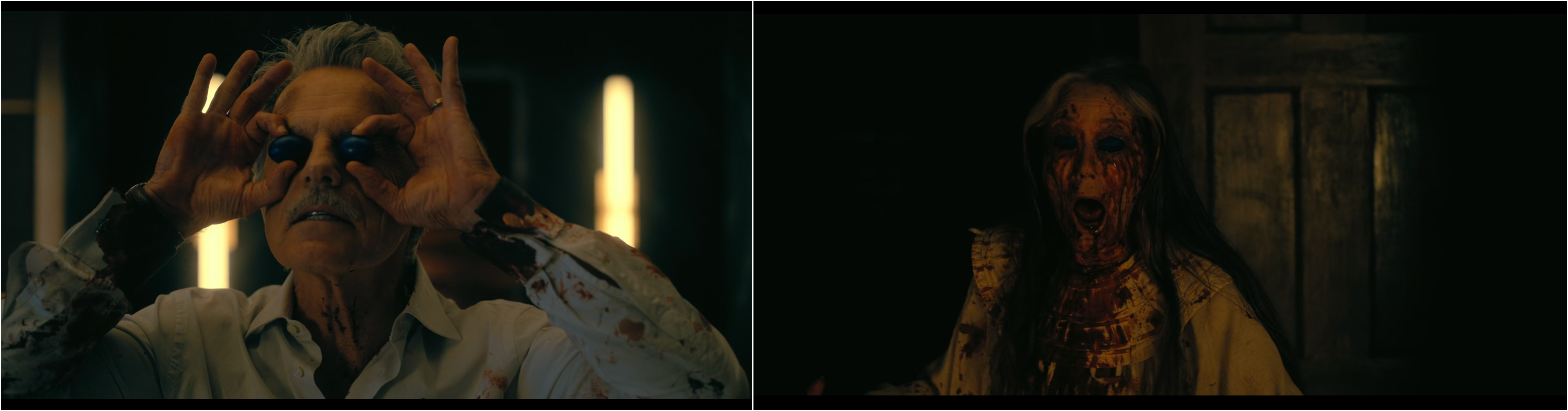
Queen Tausert's sapphires (Screenshot by the author)
Egyptomania narratives or motifs
This reconceptualization of some of Edgar Allan Poe's most famous stories is particularly interesting in its treatment of different plot elements inspired by ancient Egypt.
The two main characters, the siblings Roderick and Madeline Usher, are both characterised through various Egyptian elements. Both are the owners of a large business, Fortunato, which is mainly involved in the production and distribution of pharmaceuticals. Their power and influence are enormous. Precisely from this sense of control and dominance, as well as invulnerability, comes their perception of being close to the Egyptian pharaohs and, even more so, to the Egyptian gods. In episode 8, Roderick Usher is in his office at the top of his office building. Through the window he watches as all those who have died from their addiction to Ligodon, one of the drugs Fortunato produces, fall from the sky to crash to the ground, with an aesthetic clearly borrowed from 9/11 television images. In dialogue with the series' antagonist character, Verna (played by Carla Gugino), she tells him that Fortunato's building is a tomb, since from it death comes to so many people. Verna then says explicitly that the building, in this funerary characterisation, is a pyramid. This description also puts forth the narrative of the Egyptian as an expression of tyranny, for Roderick Usher is the lord of the pyramid who looks down undeterred on the doom of the human life that lies at his feet.
The building's Egyptian connection is intensified by the presence in Roderick's office of a wealth of Egyptian antiquities, such as a khepesh-sword, with which he intends to kill himself, and two sapphires said to have belonged to Queen Tausert of the 19th Egyptian dynasty.
Madeline Usher also has an interesting collection of Egyptian artefacts. In episode 2, she is given a box containing the spatula used by burial priests to liquefy the brain during the mummification ritual in ancient Egypt. Madeline is also recurrently called Cleopatra. Verna calls her this to define an empowered, self-confident but equally ambitious and ruthless woman, eager to change the world and transgress the laws of nature in order to live forever. The following dialogue between Madeline and Verna summarises their interaction:
Madeline: “I’d never let a man have power over me and I would figure out how to live forever”.
Madeline's destiny is to become Queen Tausert herself and even be considered a goddess. In the final episode, Roderick poisons her and embalms her. He then dresses her in an Egyptian-looking white shroud and replaces her eyes with the sapphire spheres that belonged to the queen, as these are supposed to bring power and sight in the afterlife. This post-mortem treatment takes place in the basement of the house, where Madeline/Tausert's body will finally lie surrounded by her Egyptian funerary furnishings, brought by Roderick to turn the place into an Egyptian tomb.
Other elements of interest to our research relate to various motifs shown throughout the series. In episode 6, one of Roderick's daughters, Tamerlane Usher, creates Goldbug, a brand of luxurious and exotic beauty and healthy living products. The logo is an Egyptian winged scarab, again conveying the idea of Egypt being linked to opulence and even extravagance (two of the products presented by Tamerlane are "French energy oil", made with black diamond truffle extract, and "Creme de lune", made with green caviar algae and south sea pearls). A second point of interest lies in the fact that these products, says the creator of the brand, are the key to eternal youth, which connects them to the traditional idea of the Egyptian link to immortality.
Finally, the strong symbolic dimension of the series in relation to ancient Egypt in popular culture gives way to a much more "materialistic" testimony in episode 6. After receiving the sapphires, Roderick begins a soliloquy in which he says that the sapphires are priceless but that he has obtained them with patience and money, with which he has been able to break down all the obstacles of the Egyptian institutions:
What does the Supreme Council of Antiquities cost?
The two main characters, the siblings Roderick and Madeline Usher, are both characterised through various Egyptian elements. Both are the owners of a large business, Fortunato, which is mainly involved in the production and distribution of pharmaceuticals. Their power and influence are enormous. Precisely from this sense of control and dominance, as well as invulnerability, comes their perception of being close to the Egyptian pharaohs and, even more so, to the Egyptian gods. In episode 8, Roderick Usher is in his office at the top of his office building. Through the window he watches as all those who have died from their addiction to Ligodon, one of the drugs Fortunato produces, fall from the sky to crash to the ground, with an aesthetic clearly borrowed from 9/11 television images. In dialogue with the series' antagonist character, Verna (played by Carla Gugino), she tells him that Fortunato's building is a tomb, since from it death comes to so many people. Verna then says explicitly that the building, in this funerary characterisation, is a pyramid. This description also puts forth the narrative of the Egyptian as an expression of tyranny, for Roderick Usher is the lord of the pyramid who looks down undeterred on the doom of the human life that lies at his feet.
The building's Egyptian connection is intensified by the presence in Roderick's office of a wealth of Egyptian antiquities, such as a khepesh-sword, with which he intends to kill himself, and two sapphires said to have belonged to Queen Tausert of the 19th Egyptian dynasty.
Madeline Usher also has an interesting collection of Egyptian artefacts. In episode 2, she is given a box containing the spatula used by burial priests to liquefy the brain during the mummification ritual in ancient Egypt. Madeline is also recurrently called Cleopatra. Verna calls her this to define an empowered, self-confident but equally ambitious and ruthless woman, eager to change the world and transgress the laws of nature in order to live forever. The following dialogue between Madeline and Verna summarises their interaction:
Madeline: “I’d never let a man have power over me and I would figure out how to live forever”.
Verna: “Cheers to you, Cleopatra”
Madeline's destiny is to become Queen Tausert herself and even be considered a goddess. In the final episode, Roderick poisons her and embalms her. He then dresses her in an Egyptian-looking white shroud and replaces her eyes with the sapphire spheres that belonged to the queen, as these are supposed to bring power and sight in the afterlife. This post-mortem treatment takes place in the basement of the house, where Madeline/Tausert's body will finally lie surrounded by her Egyptian funerary furnishings, brought by Roderick to turn the place into an Egyptian tomb.
Other elements of interest to our research relate to various motifs shown throughout the series. In episode 6, one of Roderick's daughters, Tamerlane Usher, creates Goldbug, a brand of luxurious and exotic beauty and healthy living products. The logo is an Egyptian winged scarab, again conveying the idea of Egypt being linked to opulence and even extravagance (two of the products presented by Tamerlane are "French energy oil", made with black diamond truffle extract, and "Creme de lune", made with green caviar algae and south sea pearls). A second point of interest lies in the fact that these products, says the creator of the brand, are the key to eternal youth, which connects them to the traditional idea of the Egyptian link to immortality.
Finally, the strong symbolic dimension of the series in relation to ancient Egypt in popular culture gives way to a much more "materialistic" testimony in episode 6. After receiving the sapphires, Roderick begins a soliloquy in which he says that the sapphires are priceless but that he has obtained them with patience and money, with which he has been able to break down all the obstacles of the Egyptian institutions:
What does the Supreme Council of Antiquities cost?
What does the Coalition to Protect Egyptian Antiquities cost?
What does the Minister of Antiquities cost?
What does the Secretary General cost?
What do the Egyptian National Police cost?
Author: Abraham I. Fernández Pichel
Other information
Tags
Write a Comment
Tem de iniciar a sessão para publicar um comentário.