

Children of the Nile
Game Family:
City Building
Year:
2008
Nationality:
USA
Authors:
Mike Gingerich, Ken Parker
Designer:
Chris Beatrice, Tony Leier, Jeff Fiske
Artists:
Dennis Rose, Mike Malone, Adam Carriuolo, Kwan Sukasame
Publisher:
Tilted Mill Entertainment Inc.
Number of Players:
Single-player
Genre:
Historical, Strategy, Managerial
Other websites:

Videos by players:

Summary of the game
Children of the Nile Complete is a brilliantly shining gem of a city-building game, in both scope and attention to detail. To achieve immortality, a Pharaoh must look beyond his own city’s borders and make his mark on the world. Explore and establish trade with foreign nations and you will have the motivation to build commemorative wonders that will proclaim the strength and power of your dynasty throughout history. As your prestige rises so too will your ability to attract more people to take part in your ambitious endeavors and build cities that are truly awe-inspiring. How will your dynasty be remembered? (gog.com)
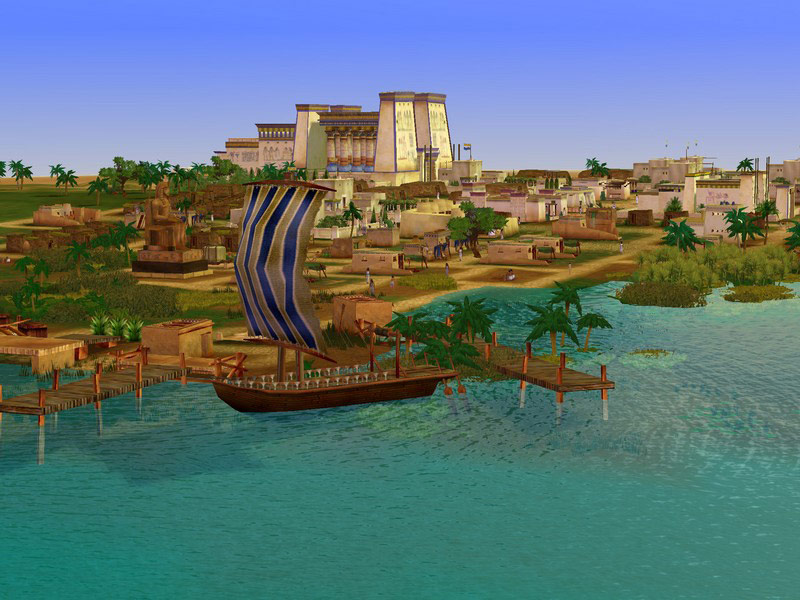
An Egyptian temple on the banks of the Nile (https://store.steampowered.com/app/17100/Children_of_the_Nile_Enhanced_Edition/)
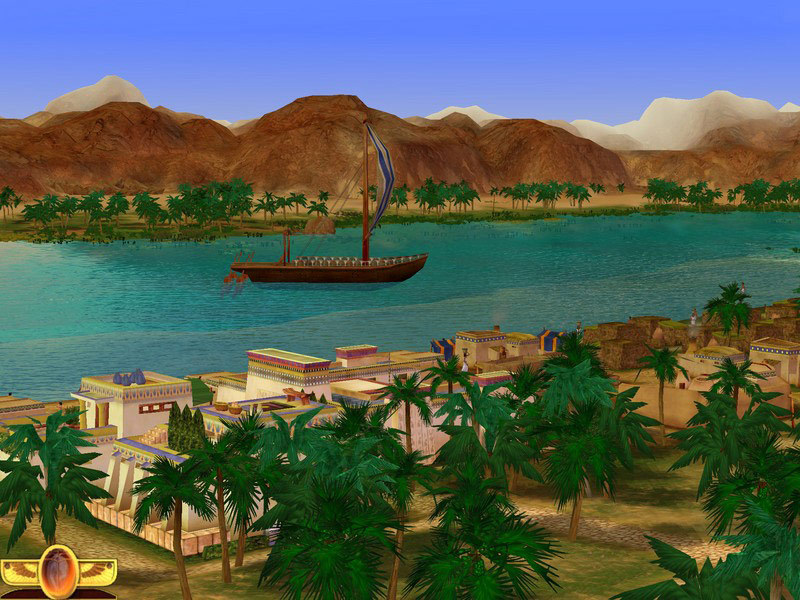
Navigation on the Nile River (https://store.steampowered.com/app/17100/Children_of_the_Nile_Enhanced_Edition/)
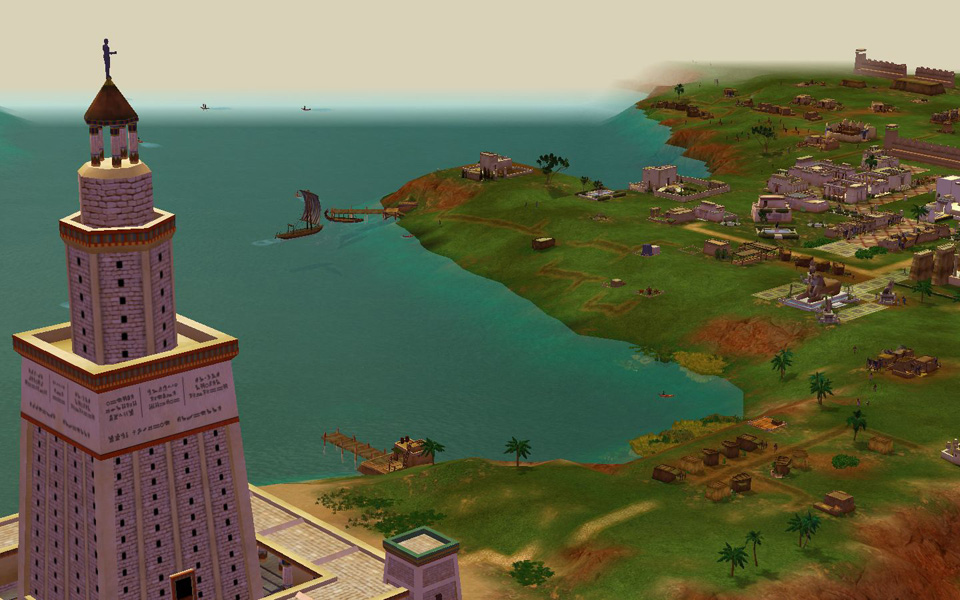
The Lighthouse of Alexandria according to the players (https://store.steampowered.com/app/17120/Children_of_the_Nile_Alexandria/)
Egyptomania narratives or motifs
In this city-building game, players become pharaohs and lead their people through the ages by trying to keep all of their subjects alive, happy, and wealthy. Alongside various single scenarios, there are two campaigns in chronological order, the first spanning the dynastic period of Egyptian history, and the second focused on the Hellenistic Period. The game requires extensive micromanagement of resources and workforce and attention to citizens’ needs, as well as city planning and decisions regarding foreign policy. This depiction of Egypt is very celebratory (e.g. the triumphant inscriptions on stelae players can erect after military victories) and omits the use of forced labour and war prisoners to build monuments and collect resources, while also conveying a somewhat optimistic impression of vertical social mobility (citizens can go up in rank in the span of a generation). At the same time, there is a delightful hint of sarcasm in the game’s reminder with annual birthday wishes that pharaoh should be preparing for death and think about building a monumental tomb.
Author: Kate Minniti
Other information
Jackson, B., Minniti, K. “The roots of the tech tree. City-building games as a learning tool for early urbanization” in Playing with the Past: An Interdisciplinary Examination of Archaeogaming, edited by M. Victor. New York: Bergahn (under review).
Not available
Tags
Write a Comment
Tem de iniciar a sessão para publicar um comentário.